

Index of Contents
We’ve all been there – standing in awe before a serene lake, marveling at the perfect mirror image of mountains and sky. That moment when nature’s beauty is doubled, creating a breathtaking scene that seems almost magical. It’s in these instances that we reach for our cameras, eager to capture the stunning reflections before us.
Reflection photography offers a unique way to see the world around us. It’s not just about capturing what’s in front of the lens, but also the mirror images that add depth and intrigue to our shots. Whether it’s a cityscape reflected in a puddle or a forest mirrored in a still pond, these images have the power to stop viewers in their tracks.
In our journey to master this art, we’ve discovered that reflection photography isn’t just about finding the right reflective surface. It’s about understanding light, angles, and timing. It’s about seeing the world with fresh eyes and finding beauty in the most unexpected places.
As we delve into the world of reflection photography, we’ll explore techniques to create captivating mirror images that will elevate your photography to new heights. From choosing the right equipment to mastering post-processing tricks, we’ll guide you through every step of capturing these mesmerizing shots.
Key Takeaways
- Reflection photography adds depth and intrigue to images
- Understanding light and timing is crucial for capturing stunning reflections
- Various surfaces can create unique mirror images
- Proper equipment enhances reflection photography results
- Post-processing techniques can further improve reflection photos
Understanding the Basics of Reflection Photography
Reflection photography opens up a world of creative possibilities. It lets us double the beauty in our shots by capturing mirror-like images on various surfaces. Let’s dive into the essentials of this art form and explore how to make the most of reflective surfaces.
What is reflection photography?
Reflection photography is the art of capturing mirror-like images on different surfaces. It creates a stunning visual effect by duplicating subjects in the frame. This technique adds depth and intrigue to photos, turning ordinary scenes into extraordinary compositions.
Types of reflective surfaces
Reflective surfaces are key to successful reflection photography. Water bodies like lakes, puddles, and oceans are popular choices. Glass windows, polished metals, and mirrors offer unique opportunities for urban shots. Even wet pavements after rain can create interesting reflections. Experimenting with different surfaces helps develop our skills in this genre.
Essential equipment for capturing reflections
While creativity is crucial, having the right photography equipment enhances our ability to capture stunning reflections. A camera with manual settings allows for precise control over exposure and focus. A sturdy tripod ensures stability, especially in low-light conditions. Polarizing filters can be invaluable for managing reflections, either enhancing or reducing them based on our artistic vision.
- Camera with manual settings
- Tripod for stability
- Polarizing filters
- Wide-angle lens (optional)
By mastering these basics and exploring various reflective surfaces, we can create captivating images that showcase the beauty of our surroundings in a unique way.
Techniques for Capturing Stunning Reflections
Mastering reflection photography can take your water photos to new heights. We’ve gathered insights from hundreds of photographers. They share the most effective strategies for creating captivating shots.
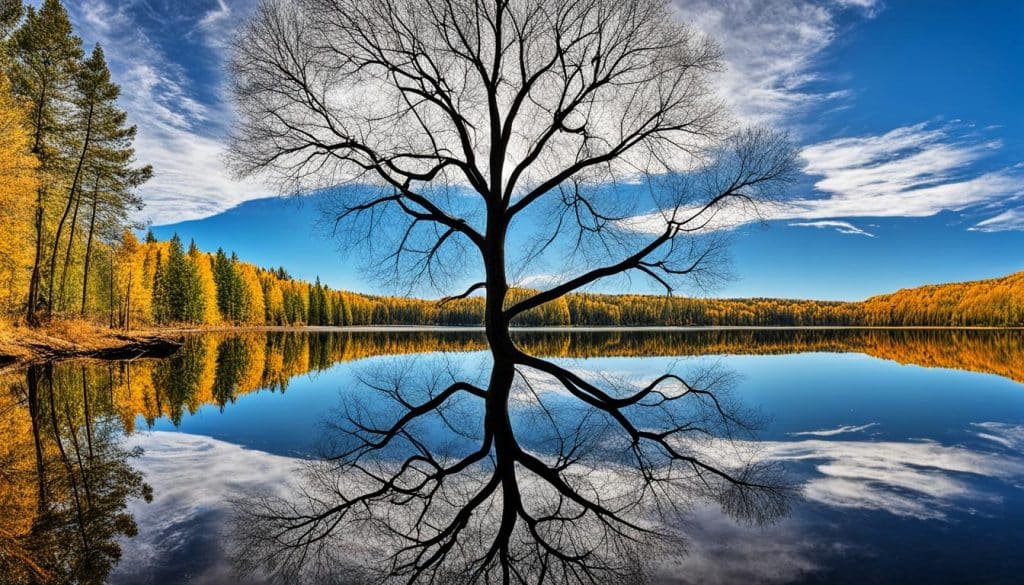
Lighting is key in reflection photography. Early morning or late afternoon light often produces the best results. This light creates a soft, golden glow that enhances the reflective qualities of water surfaces.
Composition is crucial for capturing reflections. Try different angles and perspectives to find the most compelling reflections. Use a low camera angle or a tripod for more creative shots.
To improve reflections and reduce glare, consider using a polarizing filter. This tool can make your water photos clearer and more vibrant. Adjusting the filter lets you control the reflection in your image for greater creative control.
- Choose the right time of day for optimal lighting
- Experiment with various angles and perspectives
- Use a polarizing filter to enhance reflections
- Pay attention to the balance between reflection and subject
Remember to balance the reflection and subject in your composition. Both should make your image visually appealing. With practice and patience, you’ll soon capture stunning reflections that double the beauty in every shot.
Reflection Photography: Tips for Creative Shots
We’re diving into the world of creative reflection photography. Our goal is to help you capture stunning images that double the beauty in every shot. Let’s explore some key techniques to elevate your reflection photos.
Choosing the right time of day
The golden hour, just after sunrise or before sunset, offers soft, warm light perfect for reflection shots. During this time, the low angle of the sun creates long shadows and enhances textures. The blue hour, shortly before sunrise or after sunset, provides a cool, ethereal atmosphere ideal for urban reflections.
Exploring different angles and perspectives
To create unique reflection images, try getting low to the ground or finding elevated vantage points. Experiment with tilting your camera or using a wide-angle lens to capture more of the reflective surface. Remember, changing your perspective can dramatically alter the composition and mood of your photo.
Using polarizing filters to enhance reflections
Polarizing filters are valuable tools in reflection photography. They allow you to control the amount of reflection visible in your shot, helping to balance the reflected image with the surrounding scene. These filters can also enhance colors and reduce glare, making them essential for creative reflection photography.
Post-processing techniques for reflection photos
Photo editing plays a crucial role in perfecting your reflection images. Use cropping to improve composition, adjust contrast to make reflections pop, and fine-tune colors to enhance the overall mood. With these techniques, you can transform good shots into extraordinary visual stories that captivate viewers.
FAQ
What is reflection photography?
What types of reflective surfaces can be used for reflection photography?
What essential equipment is needed for reflection photography?
When is the best time to capture reflections?
How can I use different angles and perspectives for creative reflection shots?
How do polarizing filters enhance reflections?
What post-processing techniques can be used for reflection photos?
Source Links
- 12 Creative Photography Ideas & Techniques to Try – https://www.slrlounge.com/creative-photography-ideas/
- 40+ AI Prompts to Generate High-Quality Photography Portraits – https://greataiprompts.com/imageprompt/ai-prompts-for-high-quality-realistic-photography-portraits/
- Taylor Swift Shares First Comments About Terror Threat That Caused Vienna Concert Cancellations – https://www.stereogum.com/2277195/taylor-swift-shares-first-comments-about-terror-threat-that-caused-vienna-concert-cancellations/news/
- Alain Delon, a universal icon – https://www.campusfrance.org/en/actu/alain-delon-une-icone-universelle
- 10 Great Reasons to Let Go of Things Sooner Rather than Later – https://www.marcandangel.com/2024/08/21/10-simple-reasons-its-time-to-let-go/
- Exploring the Real Manor Lords: A Journey into History and Community – https://www.zleague.gg/theportal/exploring-the-real-manor-lords-a-journey-into-history-and-community/
- Alignment: Harmonizing Language Policies, Tests and Courses – https://link.springer.com/chapter/10.1007/978-3-031-67559-1_14
- INTERVIEW: Modern Silent Cinema – Vents Magazine – https://ventsmagazine.com/2024/08/21/interview-modern-silent-cinema/
- Adobe’s Magic Fixup uses video for revolutionary AI image editing – https://www.diyphotography.net/adobes-magic-fixup-uses-video-for-revolutionary-ai-image-editing/
- BREAKING: Disney Takes Important Step Forward Amid Search To Find CEO Successor | the disney food blog – https://www.disneyfoodblog.com/2024/08/21/disney-takes-important-step-forward-amid-search-to-find-ceo-successor/
About The Author


