

Index of Contents
Last summer, we took our kids to the Pittsburgh Zoo & Aquarium for a fun day out. We didn’t expect it to be an educational trip! As we entered, our 7-year-old daughter was thrilled, spotting a sign about flamingos. This made us realize the zoo could be more than just a place to see animals.
With over 8,000 animals and more than 600 species, the zoo was full of learning chances. Our kids were captivated by the 30 species of concern, learning about endangered animals and how to help them. As we walked through the exhibits, we had deep talks about where animals live, how they act, and the environment.
This trip turned from a simple outing to a learning adventure. Zoos are great for hands-on learning, perfect for educational trips. Every moment was a chance to learn about wildlife, from interactive programs to watching animals in their homes.
Key Takeaways
- Zoo visits can be turned into fun learning experiences
- Plan ahead to make the most of your visit
- Use zoo programs to learn more
- Encourage kids to ask questions and watch the animals
- Learn about conservation and endangered animals
- Play interactive games to keep kids interested
- Link zoo visits to bigger environmental issues
Preparing for an Educational Zoo Adventure
Getting ready for the zoo is crucial for a great visit. We’ll show you what to pack, how to research animals, and set goals for a memorable trip.
Essential Items to Pack for a Day at the Zoo
Don’t forget these important items:
- Sunscreen and hats
- Water bottles
- Healthy snacks
- Comfortable walking shoes
- Binoculars or a camera
Researching Zoo Exhibits and Animals in Advance
Learning about the zoo beforehand makes your visit better. Look at the zoo’s website for exhibit details and events. Find out about different animals and their homes. This will make your visit more interesting and informative.
Setting Learning Goals for Your Zoo Visit
Set clear goals for your zoo trip to make it educational:
- Identify a specific number of animal species
- Learn about conservation efforts
- Understand animal behaviors in relation to their natural habitats
- Discover the role of zoos in wildlife protection
With these goals, your zoo visit will be a fun learning experience for everyone.
Making Zoo Visits Interactive and Educational
Zoo visits are a great chance for interactive learning and watching animals up close. We can make these trips into fun learning experiences. They can spark kids’ curiosity about the animal world.
Engaging in Zoo-Provided Educational Programs
Many zoos have guided tours and keeper talks. These programs give deep insights into how animals live and their homes. Kids learn directly from experts in the field.
Creating Scavenger Hunts and Observation Games
Custom scavenger hunts make zoo visits exciting. Kids can look for certain animals or behaviors. This helps them improve their observation skills. It also makes learning about habitats fun.
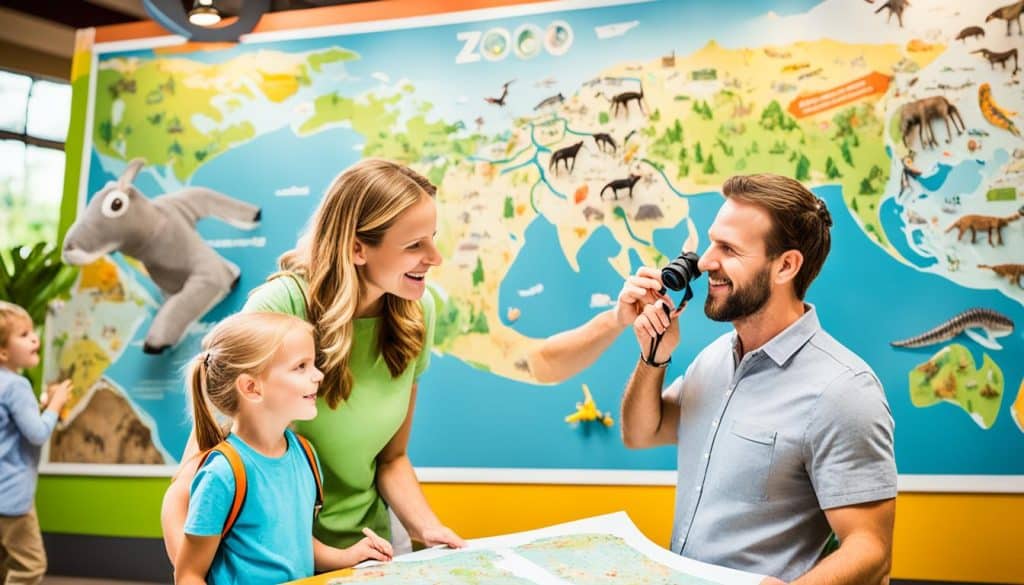
Encouraging Kids to Ask Questions and Take Notes
Encourage kids to ask questions about the animals they see. Tell them to write down what they notice or draw what catches their eye. This way, they learn more and remember it better.
Connecting Animal Behaviors to Natural Habitats
Help kids see how zoo animals relate to their wild friends. Talk about how their homes affect their actions and how they adapt. This helps them understand ecosystems and why we need to protect them.
| Zoo Activity | Educational Benefit |
|---|---|
| Keeper Talks | Expert insights on animal care |
| Scavenger Hunts | Enhanced observation skills |
| Note-taking | Improved information retention |
| Habitat Comparisons | Understanding of ecosystems |
Conclusion: Transforming Zoo Visits into Lasting Learning Experiences
Zoo visits can be powerful for learning and family bonding. By planning ahead, joining in activities, and thinking about what we see, we make our zoo trips unforgettable. Zoos draw families wanting to learn about animals, just like Norfolk’s North Fork Whitewater Park attracts adventurers.
After visiting the zoo, talking about what we saw and learned is key. This sharing solidifies our understanding, similar to how Norfolk’s River Point Square is a spot for community talks. Encouraging kids to talk about their favorite animals or facts helps us all connect more with nature.
To keep the learning going, try activities at home. Making an animal scrapbook or learning more about a species keeps the excitement alive. This is like how Norfolk uses CDBG funds for community projects. By making zoo visits educational, we’re not just having fun. We’re building a lifelong love for nature and helping our planet.
FAQ
What essential items should we pack for a day at the zoo?
How can we research zoo exhibits and animals in advance?
What are some learning goals we can set for our zoo visit?
What are some ways to engage in zoo-provided educational programs?
How can we create scavenger hunts and observation games?
How can we encourage kids to ask questions and take notes?
How can we connect animal behaviors to their natural habitats?
Source Links
- Zoo Information – Pittsburgh Zoo & Aquarium – https://www.pittsburghzoo.org/plan-your-visit/zoo-information/
- Wild Encounters – Pittsburgh Zoo & Aquarium – https://www.pittsburghzoo.org/experiences/wild-encounters/
- Bear family’s death sparks outrage in Old Forge – https://www.adirondackexplorer.org/stories/bear-family-death-old-forge
- Spotting the majestic tigers of Nagarhole on an unforgettable safari – https://timesofindia.indiatimes.com/travel/things-to-do/spotting-the-majestic-tigers-of-nagarhole-on-an-unforgettable-safari/articleshow/112706871.cms
- Guatemalan police arrest 7 accused of trafficking the 53 migrants who asphyxiated in Texas in 2022 – https://www.news4jax.com/news/world/2024/08/22/guatemalan-police-arrest-7-accused-of-trafficking-the-53-migrants-who-asphyxiated-in-texas-in-2022/
- Navigating the Future of Apprenticeships: Insights from the DfE Growth and Skills Levy Webinar | FE News – https://www.fenews.co.uk/exclusive/navigating-the-future-of-apprenticeships-insights-from-the-dfe-growth-and-skills-levy-webinar/
- Western Cape health MEC Mireille Wenger says child health is close to her heart, and she intends making a difference – https://www.dailymaverick.co.za/article/2024-08-21-new-western-cape-health-mec-in-bid-to-bring-about-positive-change-in-health-sector/
- Dedication, commitment drive success at Mpumelelo Secondary School – https://www.dailymaverick.co.za/article/2024-08-21-dedication-and-commitment-drive-success-as-mpumelelo-secondary-school-pupils-punch-above-their-weight/
- Baptist Health uses newer robotic technology to treat head, neck cancers – https://www.news4jax.com/health/2024/08/21/baptist-health-uses-newer-robotic-technology-to-treat-head-neck-cancers/
- City utilizes community grants to create inviting spaces – https://norfolkdailynews.com/news/city-utilizes-community-grants-to-create-inviting-spaces/article_e6f00b26-5fc9-11ef-a455-7f59b5ae2155.html
- ‘Activate Hope’ expansion of Hope Florida program focuses on emergency response to disasters – https://www.news4jax.com/news/politics/2024/08/21/desantis-first-lady-hold-news-conference-at-sarasota-fire-station/
About The Author


