

Index of Contents
We all have stories to tell, and sometimes words just aren’t enough. As photographers, we’ve found that images can speak volumes. They capture emotions and memories in ways text alone cannot.
Our journey into visual storytelling started with a simple snapshot. It was a faded photo of a young couple, their eyes filled with hope and uncertainty. They were our parents, moments before they made the life-changing decision to adopt.
This image sparked our curiosity about the power of photography to convey complex narratives. We realized that every photograph has the potential to tell a story. It can freeze a moment in time that resonates with viewers on a deeply personal level.
As we delve into the world of visual narratives, we’re constantly amazed by how a single frame can encapsulate entire life stories. For example, over two million American babies were adopted in the decades before Roe v. Wade. Each adoption represents a unique tale of love, loss, and new beginnings.
These stories can be powerfully conveyed through thoughtful, emotive photography.
In our exploration of photography techniques, we’ve discovered that the most impactful images are those that go beyond mere documentation. They invite viewers to connect with the subject, to feel the emotions captured in that split second.
This is the essence of storytelling in photos. It’s about creating visual narratives that resonate on a personal level. Much like our own adoption story has shaped our perspective on identity and belonging.
Key Takeaways
- Photos can convey complex emotions and stories beyond words
- Visual storytelling connects viewers with subjects on a personal level
- Effective photo narratives evoke emotions and memories
- Understanding context enhances the impact of visual stories
- Personal experiences can inspire powerful photographic narratives
- Mastering storytelling techniques elevates photography to an art form
The Power of Visual Storytelling
Visual storytelling grabs our attention in ways words can’t. It uses narrative photography to share complex ideas and touch our hearts. This art form crosses language barriers, making it a global way to communicate.
Understanding the Impact of Narrative Photography
Narrative photography is more than just taking pictures. It tells a story in one shot or a series. Photographers use their choice of subjects, how they arrange things, and the lighting to make a strong emotional impact.
Connecting Emotion and Memory Through Images
Photos can bring back memories and feelings. A well-made image can take us back to a certain time or place. It can make us feel nostalgic, happy, or sad. This link between visual stories and our feelings makes photography a strong way to communicate.
Building a Personal Style in Storytelling Photography
Having your own style in visual storytelling is key. It makes your work stand out and recognizable. Try different techniques, subjects, and editing methods to discover your unique voice in photography.
“Photography is the story I fail to put into words.” – Destin Sparks
By getting good at these visual storytelling elements, we can make stories that touch people deeply. The strength of a good visual story is in starting conversations, changing views, and inspiring action.
Storytelling in Photos: Techniques and Tips
Mastering visual narratives combines creativity and technical skill. We’ve gathered insights from The Rogue Writer’s Storytelling Lab. These photography techniques and storytelling tips can elevate your work.
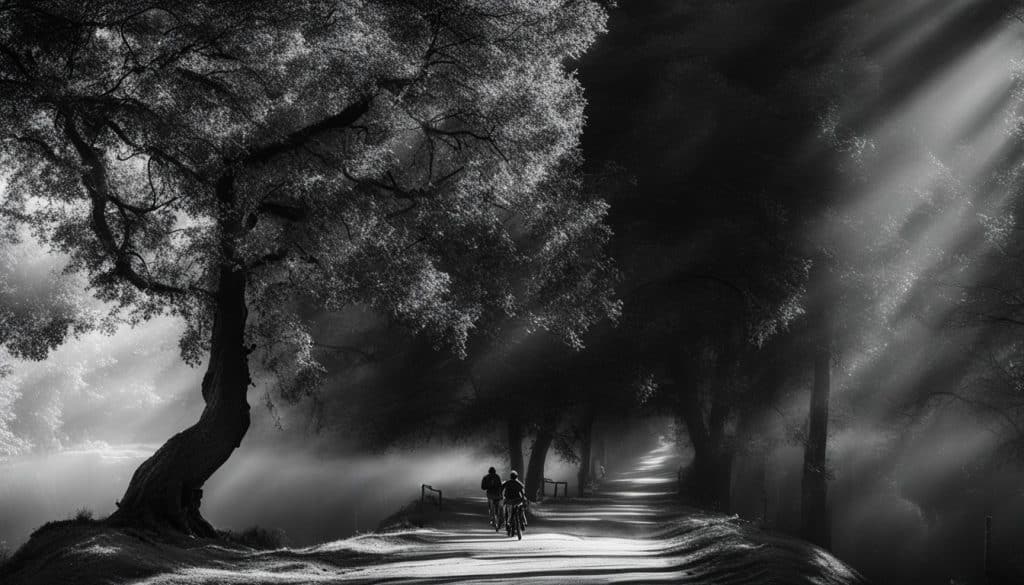
In a three-day workshop, 30 aspiring writers learned new ways to improve their storytelling. They found out how camera positioning is key to creating compelling visual narratives. By trying different angles and perspectives, you can control where the viewer looks and add depth to your images.
Lighting is a powerful tool in storytelling. Use natural light to set the mood or artificial lighting to highlight important parts of your photo. Shadows are just as crucial as light in setting the tone of your story.
- Utilize composition to guide the viewer’s eye
- Experiment with light and shadow for mood
- Incorporate symbolism to add depth
- Capture decisive moments
- Use color psychology to evoke emotions
One participant said the workshop made them understand how to create a short film. They learned how important scriptwriting is in visual storytelling. When planning your photo shoots, think about writing a basic script or storyboard to visualize your story.
| Technique | Purpose | Impact |
|---|---|---|
| Rule of Thirds | Balance composition | Creates visual interest |
| Leading Lines | Direct viewer’s gaze | Enhances narrative flow |
| Color Contrast | Highlight key elements | Evokes emotional response |
By using these photography techniques and storytelling tips, you’ll be ready to make powerful visual narratives. Remember, practice and trying new things are key to finding your unique storytelling style.
Conclusion: Bringing Your Photo Stories to Life
Visual storytelling through photography is a powerful way to capture hearts and minds. We’ve looked at various techniques to tell stories in a single photo. These skills help us turn simple pictures into moving stories that touch people deeply.
Narrative photography is more than just taking pictures. It’s about linking the photographer, the subject, and the viewer. We talked about the importance of having a personal style in storytelling photography. This makes our stories unique and memorable in a world full of images.
The path to becoming a great visual storyteller is always moving forward. We urge you to keep practicing, trying new styles, and exploring your creativity. This way, you’ll get better at photography and see the world in a new light. Let’s keep making our photo stories come alive, one amazing picture at a time.
FAQ
What is visual storytelling in photography?
Why is visual storytelling important in photography?
How can photographers develop their storytelling skills?
What are the benefits of having a personal style in storytelling photography?
Can visual storytelling be applied to different genres of photography?
What is the role of technical skills in visual storytelling?
Source Links
- I Slowly Began To Find My Voice When My Birth Mother Found Me – Electric Literature – https://electricliterature.com/a-matter-of-voice/
- Rapha: 20 years in the making – https://www.rouleur.cc/blogs/desire-journal/rapha-20-years-in-the-making
- Infosys Generative AI Testing Platform – https://aws.amazon.com/marketplace/pp/prodview-e7eh5ddnp6s3m
- The Republican Plan to Challenge a Harris Victory – https://www.nytimes.com/2024/08/22/podcasts/the-daily/georgia-election-board.html
- In a Town Full of Segregation Academies, One Black Family Grapples With the Best School Choice for Their Daughter – https://www.propublica.org/article/macon-georgia-segregation-academies-school-vouchers
- Rogue Writer’s Storytelling Lab Inspires Young Filmmakers – https://asianmoviepulse.com/2024/08/rogue-writers-storytelling-lab-inspires-young-filmmakers/
- Paramount/Skydance merger on hold again as new offer emerges – https://filmstories.co.uk/news/paramount-skydance-merger-on-hold-again-as-new-offer-emerges/
- Trump’s remixed rallies try to change the tune from ‘Crooked Joe’ to ‘Comrade Kamala’ – https://www.kuow.org/stories/trump-s-remixed-rallies-try-to-change-the-tune-from-crooked-joe-to-comrade-kamala
- Pacific Drive: A Wild Ride Through Meteorite Mayhem – https://www.zleague.gg/theportal/pacific-drive-a-wild-ride-through-meteorite-mayhem/
- Harris’ running mate Tim Walz talks of ‘bringing the joy’ in his national introduction at DNC – https://www.wishtv.com/news/harris-running-mate-tim-walz-talks-of-bringing-the-joy-in-his-national-introduction-at-dnc/
About The Author


